
Most people assume hair thinning is something they will notice immediately. They expect to see excessive hair on their brush, significant shedding in the shower, or obvious bald spots appearing over time.
But hair thinning rarely starts that way.
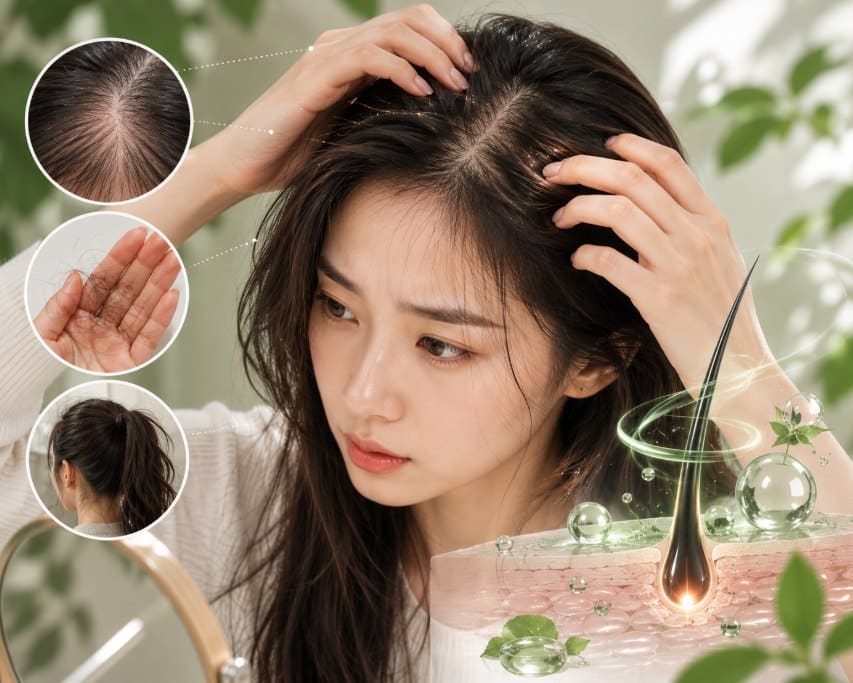
In many cases, the earliest signs develop gradually and quietly. Hair may still look relatively full, yet individual strands become finer, the scalp becomes more visible under certain lighting, and ponytails or hairstyles begin to feel slightly less voluminous than before.
Because these changes happen slowly, many people do not recognize them until significant thinning has already occurred.
The good news is that understanding the early warning signs can help support healthier hair and scalp care long before visible hair loss becomes a major concern.
Hair Thinning Is Not Always the Same as Hair Loss
One of the most common misconceptions is that thinning hair and hair loss are identical problems. Hair loss usually refers to increased shedding, where hairs fall out at a faster rate than normal. Hair thinning, however, often involves a gradual reduction in hair density, strand thickness, or overall volume.
This means you may not notice large amounts of hair falling out. Instead, the changes appear more subtly:
- Your scalp becomes easier to see when styling your hair.
- Hair feels flatter or lacks its previous fullness.
- Individual strands seem finer than before.
- Hairstyles no longer hold the same volume.
Because these changes can occur over months or even years, they are often mistaken for normal aging or temporary stress.
Your Scalp May Be Sending Warning Signs
Healthy hair starts with a healthy scalp. Just as skincare experts increasingly focus on the skin barrier, hair care specialists are paying more attention to scalp health as the foundation of stronger, healthier hair. Unfortunately, many people focus only on the hair itself while ignoring what is happening underneath.
Some common signs of scalp stress include:
- increased oiliness
- persistent dryness
- itching
- flaking
- sensitivity
- feelings of tightness after washing
These symptoms may seem unrelated to hair thinning, but they can indicate that the scalp environment is becoming less supportive of healthy hair growth. When the scalp experiences ongoing irritation or inflammation, hair follicles may struggle to function at their best.
Stress Can Affect Your Hair More Than You Think

When people think about stress, they usually think about sleep, mood, or energy levels. Hair is often overlooked. However, periods of prolonged physical or emotional stress can affect the normal hair growth cycle. Major life changes, work pressure, illness, poor sleep, restrictive diets, and chronic stress may all contribute to temporary changes in hair density.
What makes this particularly challenging is that hair often responds months after the stressful event occurred. By the time thinning becomes noticeable, the original trigger may no longer seem relevant. This delayed response is one reason many people struggle to identify why their hair suddenly feels different.
Everyday Hair Care Habits May Be Working Against You
Sometimes thinning hair is not caused by a single major issue but by the accumulation of small habits over time.
Frequent heat styling, harsh cleansing, excessive chemical treatments, and tight hairstyles can all place additional stress on the hair and scalp.
Even overwashing can become problematic for some individuals. While cleansing is important, excessively stripping the scalp may disrupt its natural balance, leading to irritation and increased sensitivity.
Modern hair care is increasingly shifting toward a gentler approach that focuses on maintaining scalp health rather than aggressively treating symptoms.
This is one reason Korean hair care has gained popularity worldwide. Many formulations prioritize hydration, scalp comfort, and barrier support instead of relying solely on harsh cleansing or heavy treatments.
Why Thicker-Looking Hair Starts With Scalp Care
Many consumers search for products that promise instant volume or rapid hair growth. While these products may provide temporary cosmetic improvements, long-term hair health often depends on creating the right environment at the scalp level.
A healthy scalp helps support:
- stronger-looking hair
- improved hair resilience
- balanced oil production
- reduced irritation
- healthier hair growth conditions
This growing focus on scalp care explains the increasing popularity of scalp serums, scalp tonics, peptide treatments, and scalp-focused Korean hair care products. Consumers are beginning to understand that healthy hair is not just about the strands they can see—it is about the skin they cannot.
The Earlier You Notice Changes, the Better

Hair thinning often develops gradually, making it easy to ignore early signs. A slightly wider part line, reduced volume, increased scalp visibility, or changes in hair texture may not seem significant at first. However, these subtle shifts can provide valuable insight into overall hair and scalp health.
The goal is not to panic over every strand of hair. Instead, it is to pay attention to changes and support the scalp before minor concerns become larger ones. Just as modern skincare emphasizes prevention rather than correction, the future of hair care is moving in the same direction.
Conclusion
Hair thinning is often a gradual process rather than a sudden event. Many people do not recognize the early signs until noticeable volume loss has already occurred. By paying attention to scalp health, reducing chronic stress, and adopting supportive hair care habits, it is possible to create a healthier environment for stronger, fuller-looking hair over time. As Korean beauty continues expanding beyond skincare into advanced scalp care, consumers are discovering that healthy hair begins long before the strands themselves—it starts at the scalp.