

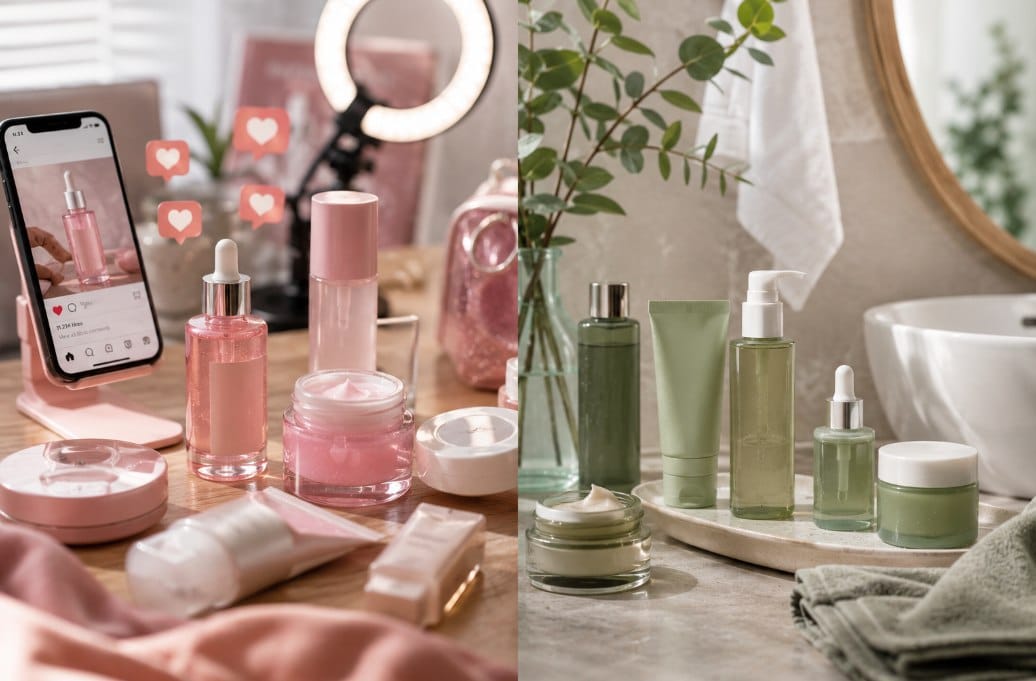
In the fast-moving world of Korean skincare, a product can go from unknown to viral in a matter of days. A short video, a new ingredient, or a recommendation from a popular creator can suddenly generate enormous consumer interest. For retailers and distributors, this creates an exciting opportunity—but also a difficult question: is this product going to become a long-term bestseller, or is it simply having its viral moment?
This distinction is becoming increasingly important as K-beauty expands globally. Korean skincare is no longer a niche category in many international markets. It is becoming part of mainstream beauty retail, while social media continues to accelerate product discovery.
For a B2B buyer, however, popularity alone is not enough. A successful product needs to do more than generate attention. It needs to sell consistently, encourage repeat purchases, fit naturally into customers’ routines, and make commercial sense for the retailer. Understanding the difference between a trending product and a sustainable bestseller can therefore make a significant difference to inventory decisions, cash flow, and long-term business growth.
A Viral Product Can Sell Fast Without Selling for Long
The first thing retailers need to understand is that sales velocity and long-term demand are not the same thing. A trending product can experience an extraordinary spike in sales because of social media exposure, influencer content, a limited promotion, or a sudden increase in consumer curiosity. Customers may purchase it because everyone is talking about it, not because they have already decided to make it part of their routine.
This does not mean viral products are bad investments. Quite the opposite: a strong trend can introduce a new category to thousands of consumers and create valuable traffic for a retailer.
The problem appears when businesses confuse a short-term sales spike with sustainable demand. A product that sells extremely well for three weeks may eventually slow down once consumers have tried it. A sustainable bestseller behaves differently. Its sales may not look spectacular on a single day, but demand remains stable over months because the product solves a recurring problem or becomes part of an everyday routine.
Current beauty-market research points toward simpler routines, higher expectations for efficacy, credible ingredients, and multifunctional products. These characteristics can make a product more resilient after the initial trend cycle disappears.
For buyers, the important question is therefore not simply “Is this product trending?”
It is: “Why would customers buy this product again?”
What Makes a Product a Sustainable Bestseller?

Long-term bestsellers usually have something in common: they solve a problem that does not disappear when the trend does. Hydration, sensitivity, barrier support, sun protection, uneven texture, scalp health, and signs of skin aging are ongoing consumer concerns. A product addressing one of these needs has a stronger chance of remaining commercially relevant than a product whose appeal depends entirely on novelty.
Ingredient recognition can also play an important role. Consumers are increasingly shopping through ingredients and product functions rather than relying only on brand names. PDRN, peptides, retinal, Centella Asiatica, ceramides, and other recognizable ingredients can help products attract attention, but the ingredient itself is only the beginning. The formulation, texture, usability, price point, and overall customer experience determine whether that initial interest turns into repeat purchasing.
A sustainable bestseller usually combines several characteristics:
- A clear consumer problem: customers immediately understand what the product is designed to help with, whether that means hydration, barrier support, brightening, anti-aging, or scalp care, without needing a complicated explanation.
- Routine compatibility: the product fits naturally into an existing skincare routine and does not require consumers to completely change their habits before they can use it.
- Repeat-purchase potential: customers can realistically finish the product and have a reason to purchase it again rather than treating it as a one-time experiment.
- Accessible positioning: the price, format, and perceived value make sense for the target market and allow customers to repurchase without feeling that the product is an occasional luxury.
- Long-term relevance: the product remains useful even when the social media conversation moves on to another ingredient or category.
This is why everyday skincare often has stronger long-term potential than products built entirely around novelty.
The Ingredient Trend Is Not the Same as the Product Trend
One of the biggest mistakes in beauty purchasing is assuming that a popular ingredient automatically guarantees a successful product.
Consider the current interest in PDRN. The ingredient has received significant attention and has become one of the recognizable concepts associated with modern Korean skincare. Vogue’s 2026 overview of K-beauty ingredients also highlights PDRN alongside established ingredients such as snail mucin, Centella Asiatica, rice, ginseng, and green tea.
But an ingredient trend does not mean every product containing that ingredient will become a bestseller.
Imagine two products featuring the same trending active. One may have a lightweight texture, a convenient format, a clear consumer benefit, and a price that encourages repeat purchases. The other may have attractive packaging but an inconvenient application process, unclear positioning, and limited everyday usefulness.
The ingredient is identical. The commercial potential is not. This distinction is particularly important for B2B buyers because a supplier’s catalogue may contain many products built around the same trending ingredient. The challenge is not simply finding the ingredient—it is identifying the product that gives customers a reason to choose it and return to it.
How Retailers Can Test a Product Before Scaling It

The safest approach is not to ignore trends but to test them intelligently.
A retailer does not necessarily need to choose between viral products and evergreen products. A stronger strategy is to create a portfolio where trend-driven products generate discovery while proven categories provide stability.
Before placing a large order, buyers can evaluate a product through several commercial signals:
- Demand quality: look beyond social media views and consider whether consumers are actively searching for the product category, ingredient, or skin concern across multiple channels. A product supported by broader consumer interest is generally more promising than one dependent on a single viral post.
- Customer feedback: detailed reviews, questions, repeat comments, and discussions about actual usage can reveal whether consumers see the product as something they want to continue using or simply something they wanted to try once.
- Category fit: ask whether the product complements the rest of your assortment. A serum that works with your existing cleanser, toner, moisturizer, and SPF creates more opportunities for cross-selling than an isolated product with no obvious place in a routine.
- Repurchase behavior: this is one of the strongest signals of sustainability. If customers finish the product and actively look for it again, the business has evidence that demand goes beyond the original trend.
- Price-to-value perception: a product does not necessarily need to be inexpensive. Premium products can perform extremely well when consumers understand the value. What matters is whether the perceived benefit justifies the price for the target customer.
- Supply reliability: even a successful product can become a problem if inventory is inconsistent. Sustainable retail growth requires products that can be replenished when customers want to repurchase them.
This approach allows retailers to use trends as a source of discovery without allowing trends to dictate the entire purchasing strategy.
Build Your Assortment Around Both Attention and Stability
The strongest K-beauty portfolios usually contain a mixture of products serving different commercial purposes.Some products attract attention. Others create repeat sales. Some introduce customers to a new ingredient, while others become the products they quietly repurchase every few months.
This balance is particularly important as K-beauty becomes more established internationally. NIQ reported that K-beauty value sales rose 53% year over year in its latest global data, demonstrating how quickly Korean beauty is scaling beyond its traditional markets. As competition increases, simply stocking whatever is currently viral becomes less effective. Retailers need to understand why a product deserves space in their assortment.
A useful way to think about your portfolio is:
- Trending products create attention.
- Useful products create conversion.
- Reliable products create repeat purchases.
- A balanced assortment creates a business.
This does not mean every product has to be an evergreen bestseller. Trend-driven products can be extremely valuable when used strategically. They can bring new customers to your store, create social media content, introduce consumers to emerging ingredients, and help the retailer appear current.
The key is knowing which products should remain part of the core assortment and which ones should be treated as trend opportunities.
The Real Bestseller Is the Product Customers Come Back For
In a rapidly changing beauty market, the most valuable product is not necessarily the one that reaches number one on a bestseller list for a week. It is the product customers remember after the trend disappears. A sustainable bestseller solves a real problem, fits naturally into a routine, provides a convincing user experience, and gives customers a reason to purchase it again. It can benefit from social media attention, but it does not depend entirely on it.
For retailers and distributors, this creates a more strategic way to evaluate Korean skincare. Instead of asking only which products are popular today, buyers can look at the bigger picture: consumer need, product functionality, repeat-purchase potential, price positioning, category fit, and supply reliability.
The future of K-beauty retail will not belong exclusively to the products that go viral first. It will increasingly belong to the products that turn attention into trust and first purchases into long-term customer relationships.
For businesses building a Korean skincare portfolio, partnering with an experienced korean skincare wholesale exporter can make it easier to balance emerging trends with established categories and select products with both short-term visibility and long-term commercial potential.