
For decades, skincare marketing revolved around one central promise: to fight aging. Wrinkles, loss of firmness, dullness — everything was framed as a problem to correct after it appeared. But in 2026, the beauty industry is undergoing a fundamental shift. Instead of chasing visible signs of aging, both consumers and brands are embracing a new philosophy: skin longevity and prejuvenation.
This approach isn’t about looking younger at all costs. It’s about helping skin function better, longer — maintaining its resilience, balance, and regenerative capacity before major damage occurs. In many ways, it mirrors what happened in wellness and medicine: prevention has become more valuable than correction.
What Skin Longevity Really Means
Skin longevity is not a synonym for anti-aging. It focuses on how long skin can stay healthy, strong, and functional, rather than how long it can look “young.”
Healthy skin is skin that:
-
maintains a strong barrier
-
regulates hydration efficiently
-
recovers quickly from stress
-
tolerates environmental changes
-
ages gradually instead of abruptly
From this perspective, wrinkles are not the main enemy. Barrier breakdown, chronic inflammation, dehydration, and cellular fatigue are the real issues — because they accelerate visible aging long before lines appear.
Skin longevity is about supporting skin biology, not just chasing surface-level improvements.
Prejuvenation: Prevention as a Lifestyle
Prejuvenation is the practical expression of the skin longevity mindset. Instead of waiting for problems to show up, prejuvenation focuses on:
-
protecting collagen early
-
strengthening the skin barrier consistently
-
reducing low-grade inflammation
-
minimizing cumulative environmental damage
-
supporting natural repair mechanisms
This doesn’t mean using aggressive actives at a young age. In fact, it’s the opposite. Prejuvenation is about working with the skin, not against it.
In K-beauty especially, this approach aligns perfectly with long-standing principles: gentle layering, barrier-first routines, and daily protection rather than shock treatments.
Why Anti-Aging Is Being Replaced

The classic anti-aging model had three big problems:
-
It was reactive — focused on fixing visible damage instead of preventing it.
-
It often relied on irritation — stronger acids, harsher retinoids, aggressive treatments.
-
It ignored skin health — a product could reduce wrinkles while quietly weakening the barrier.
Consumers are now more educated and more cautious. They’ve experienced:
-
sensitized skin from overuse of actives
-
barrier damage from constant exfoliation
-
cycles of “repairing what skincare broke”
Skin longevity offers a more sustainable alternative: slower aging, fewer crises, more stability.
The Biology Behind Skin Longevity
From a scientific perspective, skin longevity focuses on preserving key functions:
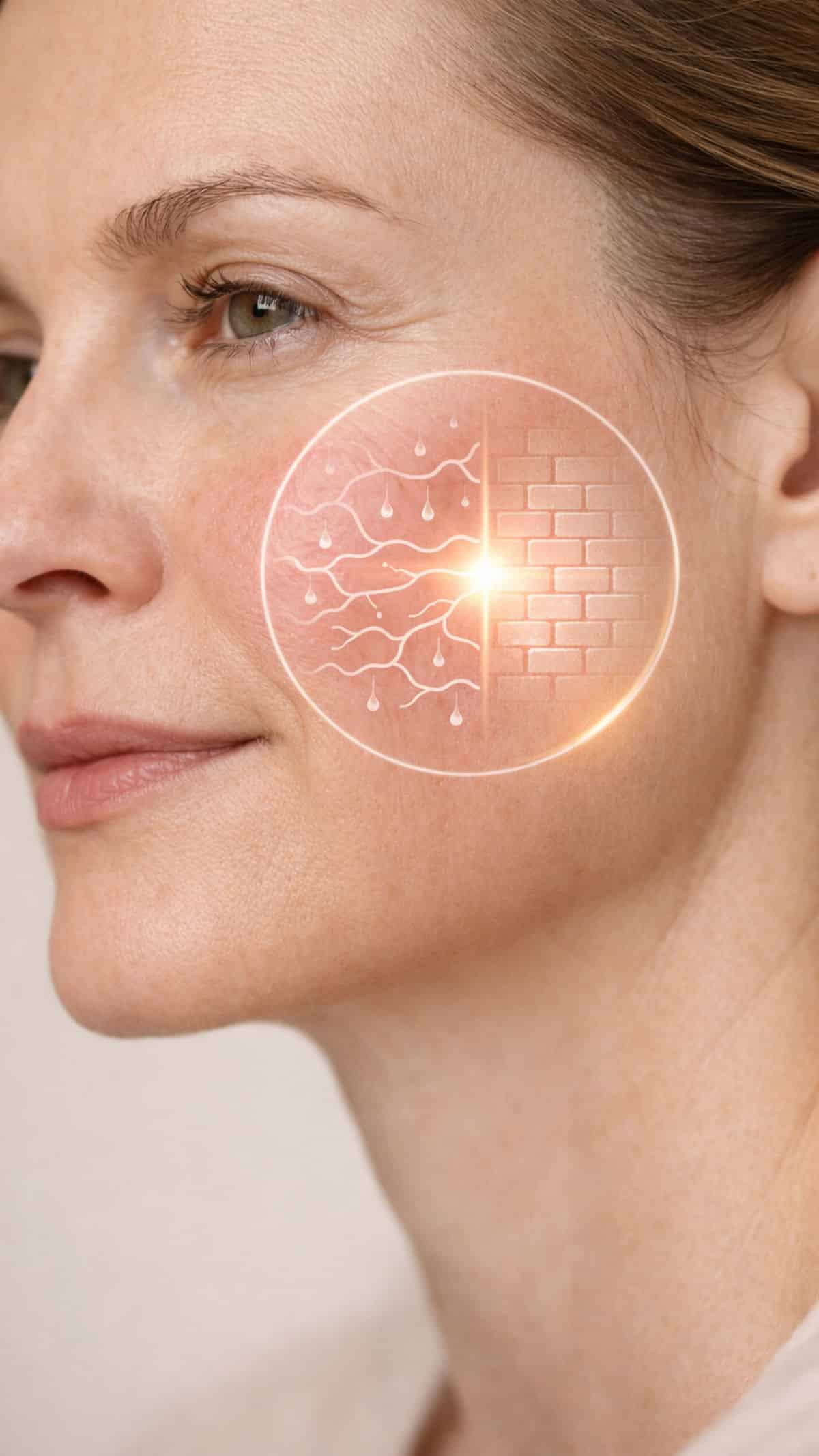
- Barrier Integrity. A strong barrier reduces water loss, protects from pollutants, and prevents chronic inflammation. Once the barrier is compromised repeatedly, aging accelerates dramatically.
- Cellular Communication. Healthy skin depends on efficient signaling between cells. Ingredients like peptides, growth-factor-inspired actives, and regenerative-support compounds are designed to support this communication.
- Controlled Inflammation. Low-grade, chronic inflammation — often caused by UV, pollution, stress, and irritation — is one of the biggest drivers of premature aging. Longevity-focused skincare aims to calm, not provoke, the skin.
- Repair Capacity. Instead of forcing rapid turnover, modern formulas support the skin’s natural repair cycles, helping it recover from daily micro-damage more efficiently.
How K-Beauty Fits Perfectly Into This Shift

Korean skincare has always prioritized:
-
prevention over correction
-
hydration over stripping
-
consistency over intensity
-
barrier care over aggressive resurfacing
That makes K-beauty uniquely aligned with both skin longevity and prejuvenation.
Rather than selling “miracle” overnight transformations, many Korean brands focus on:
-
long-term skin comfort
-
cumulative improvement
-
gentle but continuous support
-
multi-functional, low-irritation formulas
This is why concepts like barrier-first routines, microbiome care, and regenerative ingredients are now central to K-beauty innovation.
Key Ingredient Categories in Longevity Skincare
While trends come and go, longevity-focused formulas usually include:
-
Barrier lipids (ceramides, cholesterol, fatty acids)
-
Soothing and anti-inflammatory agents (centella, panthenol, madecassoside)
-
Antioxidants to reduce cumulative oxidative stress
-
Peptides and regenerative-support ingredients
-
Hydration systems that adapt to different environments
The goal isn’t to push skin harder — it’s to help skin work better on its own.
What a Prejuvenation Routine Looks Like
A skin longevity routine is usually:
-
simple
-
gentle
-
consistent
-
protective
-
barrier-focused
Typical structure:
-
Non-stripping cleanser
-
Hydrating, calming toner or essence
-
Serum focused on barrier or repair support
-
Balanced moisturizer
-
Daily sunscreen
Notice what’s missing: constant exfoliation, aggressive layering of actives, and “more is more” logic.
In this model, discipline beats intensity.
The Marketing Shift: From Fear to Function

Traditional anti-aging marketing was built on fear: wrinkles, sagging, time running out. Skin longevity changes the story.
The new message is:
-
support, not fight
-
maintain, not fix
-
strengthen, not stress
-
invest, not panic
This resonates strongly with modern consumers who are tired of cycling between damage and repair. They want skincare that fits into a long-term, realistic lifestyle.
Why This Trend Will Only Grow
Several forces are driving skin longevity forward:
-
better education about the skin barrier
-
fatigue from overactive routines
-
rising interest in wellness and prevention
-
longer consumer relationships with brands
-
demand for sustainable, long-term results
In other words, people no longer want skincare that “works fast and breaks things.” They want skincare that works steadily and protects what they already have.
Conclusion
Skin longevity and prejuvenation represent a smarter, calmer, and more sustainable future for skincare. Instead of chasing youth, the focus shifts to preserving function, comfort, and resilience over time. This philosophy fits naturally with the K-beauty approach, where gentle innovation, barrier health, and long-term skin support have always been central values.
For brands and retailers building their strategy around future-proof skincare, working with a reliable korean skincare wholesale exporter means gaining access to formulas designed not just to impress today, but to protect skin for years to come.