
Air conditioning is a modern necessity that keeps us comfortable during scorching summer days and inside stuffy office buildings. While a climate-controlled room offers immediate relief from external heat, it creates an artificial environment that can silently wreak havoc on your skin. Most people associate skin damage with sun exposure or pollution, but the crisp, cool air from an AC unit is often a hidden culprit behind a compromised complexion.
Understanding how air conditioning alters skin physiology is the first step toward protecting your skin barrier. With the right knowledge and a targeted skincare routine, you can enjoy a cool indoor climate without sacrificing your radiant, healthy glow.
1. The Science: How AC Causes Skin Dehydration
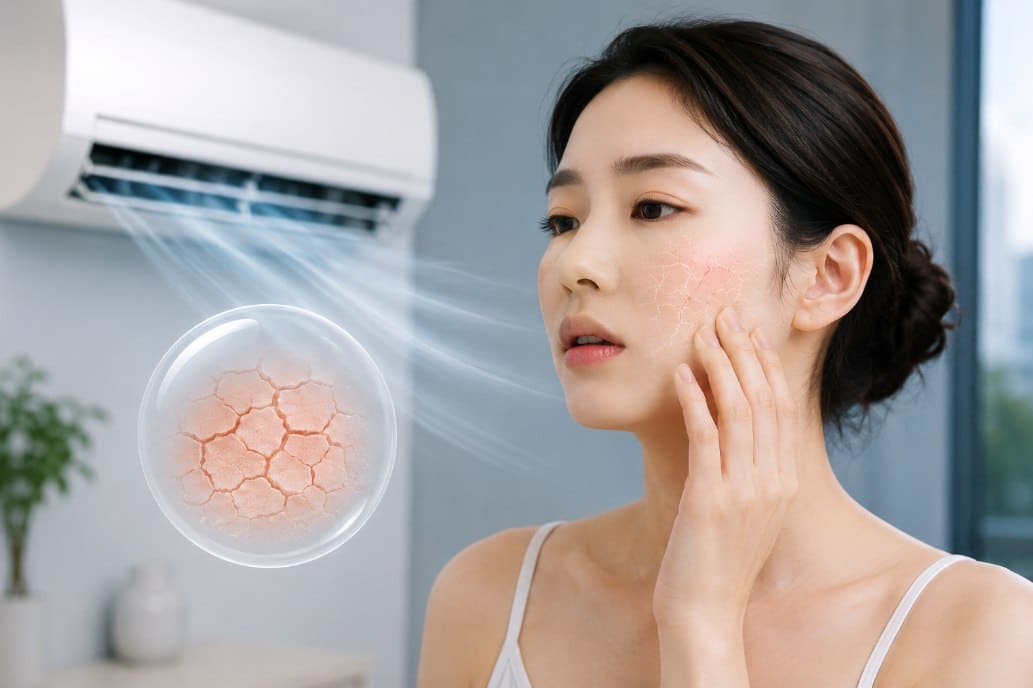
The primary function of an air conditioning unit is not just to lower the temperature, but also to reduce humidity. As the machine pulls warm air out of the room, it condenses and removes moisture from the air. This results in an exceptionally dry indoor environment.
When the air around you lacks humidity, a natural phenomenon known as Transepidermal Water Loss (TEWL) accelerates. Biology dictates that moisture moves from areas of high concentration to areas of low concentration. Because the indoor air is stripped of water, it actively draws moisture out of the topmost layers of your skin (the stratum corneum).
Unlike natural atmospheric changes, which happen gradually, moving between hot outdoor air and cold indoor air creates sudden thermal shocks. This constant fluctuation forces your skin to rapidly adjust, draining its water reserves and leaving it profoundly dehydrated.
2. Disruption of the Skin Barrier
Your skin barrier is a delicate matrix of lipids, ceramides, and fatty acids that seals moisture in and keeps irritants out. It thrives in balanced, stable environments. Constant exposure to air conditioning disrupts this equilibrium in two major ways:
- Suppressed Sebum Production: Cold air signals your sebaceous glands to slow down oil production. While less oil might sound appealing to those with oily skin, sebum is actually crucial for locking in hydration. Without it, the skin loses its protective, waterproof seal.
- Cellular Shrinkage: As water evaporates from the epidermis, skin cells shrink and lose their plumpness. This creates microscopic gaps in the skin barrier, making it fragile, brittle, and highly susceptible to micro-tears.

3. Increased Sensitivity and Premature Aging
A compromised skin barrier acts like a defense system with its gates wide open. Once the barrier is weakened by air conditioning, you will likely experience a cascade of negative skin reactions:
- Heightened Sensitivity: Environmental irritants, pollutants, and even standard skincare ingredients can easily penetrate the broken barrier. This leads to redness, itching, flaking, and a persistent tight, uncomfortable sensation.
- Exacerbation of Existing Conditions: If you suffer from eczema, psoriasis, or rosacea, the dry air from an AC unit acts as a direct trigger, frequently causing severe flare-ups.
- The Illusion of Aging: Dehydrated skin loses its elasticity. Fine lines, wrinkles, and crow’s feet become significantly more pronounced when the skin is parched. Over time, chronic dehydration can permanently accelerate the visible signs of aging, leaving the complexion looking dull and fatigued.
4. How to Protect Your Skin: Essential Care and Recommendations
You do not need to turn off your air conditioner to save your skin. Instead, you need to adapt your skincare routine and indoor habits to counteract the drying effects.
Switch to a Low-pH, Hydrating Cleanser
Avoid harsh foaming cleansers that strip away natural oils. Opt for creamy, non-foaming, or oil-based cleansers that clean the skin while depositing initial layers of hydration.
Layer Your Hydration (The “Humm-Emoll” Strategy)
To combat intense transepidermal water loss, use a two-step moisturizing approach:
- Humectants: Apply serums containing Hyaluronic Acid, Glycerin, or Polyglutamic Acid onto damp skin. These ingredients act like magnets, pulling water into the skin cells.
- Emollients and Occlusives: Lock that water in with a thicker cream containing Ceramides, Squalane, or Shea Butter. This creates an artificial shield that prevents the AC air from stealing your skin’s moisture.

- Strategic Mist Application. Keep a facial mist at your desk, but choose wisely. Avoid mists that are purely water, as they will evaporate quickly and take your skin’s natural moisture with them. Look for milky mists enriched with ceramides, centella asiatica, or panthenol to actively soothe and rebuild the barrier throughout the day.
- Modify Your Environment. If you have control over your space, place a cool-mist humidifier near your desk or bed. This returns essential moisture to the air, balancing out the drying effects of the air conditioner and giving your skin a fighting chance.
5. Advanced Esthetic Solutions and Professional Care
When daily home care is not enough to counteract the relentless drying effects of artificial cooling, turning to professional treatments and advanced formulations becomes necessary. Modern estheticians recommend incorporating deep-infusion therapies, such as hyperbaric oxygen facials or needle-free mesotherapy, to deliver moisture directly into the deeper dermal layers.
Furthermore, you should look for advanced topical products that utilize innovative delivery systems like liposomes or micro-encapsulated active ingredients. These technologies ensure that vital nutrients, vitamins, and hydrating agents penetrate the damaged skin barrier instead of simply sitting on the surface and evaporating into the dry air.
Integrating overnight sleeping masks packed with fermented ingredients and plant-derived stem cells can also accelerate nighttime cellular repair. This intensive approach allows your skin to recover from the daytime thermal shock caused by office cooling systems, ensuring you wake up with a plump, resilient, and fully revitalized complexion every single morning.
Conclusion
Air conditioning is an undeniable comfort of modern life, but its drying impact on the skin barrier requires proactive intervention. By understanding how artificial cooling accelerates transepidermal water loss, you can transition from basic skincare to an advanced, barrier-supportive regimen.
When it comes to treating dehydration and sensitivity, the global beauty industry consistently looks to South Korea for innovation. Korean skincare formulations are world-renowned for their focus on deep hydration, gentle ingredients, and barrier repair. For businesses and clinics looking to source the highest quality barrier-repair creams, soothing essences, and innovative hydrating serums, partnering with a trusted korean skincare wholesale exporter is the most effective way to access authentic, cutting-edge products that shield the skin from modern environmental stressors. Take control of your indoor environment, flood your skin with target hydration, and keep your skin barrier resilient all year round.