

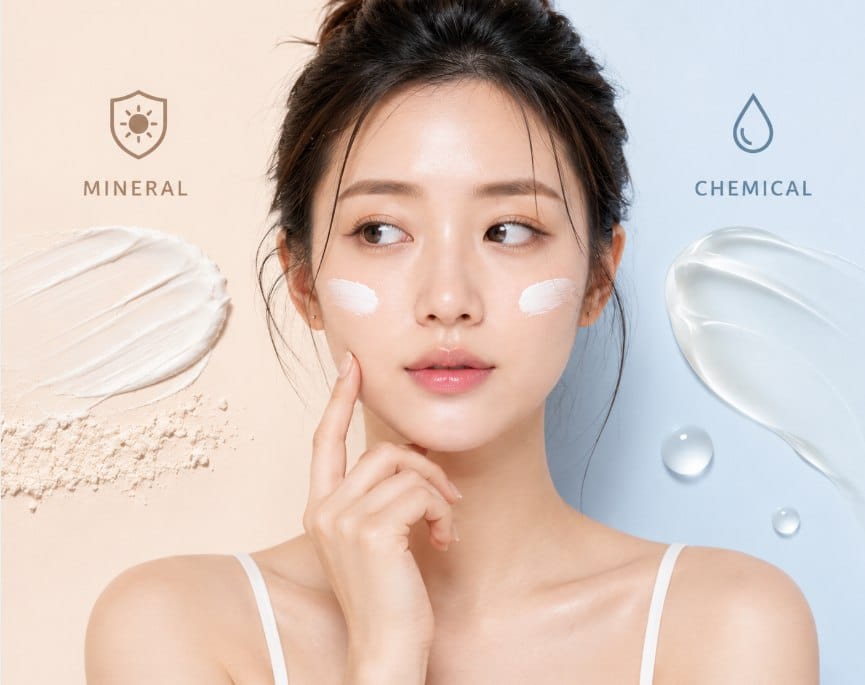
Walk into any skincare store, and you’ll quickly notice that sunscreens are often divided into two categories: mineral and chemical. For many consumers, the choice feels confusing. Is one safer? Does one work better? Which is more suitable for sensitive skin? And why do Korean skincare brands offer both?
The truth is that there isn’t a single “best” sunscreen. Both mineral and chemical sunscreens are effective when formulated well and used correctly. The real difference lies in how they protect the skin, how they feel during application, and which skin types they suit best.
Understanding these differences helps consumers choose products that match their lifestyle, skin concerns, and daily routine rather than relying on common myths.
How Mineral and Chemical Sunscreens Protect Your Skin
Although both types are designed to protect against harmful UV radiation, they do so in different ways.
Mineral sunscreens—also called physical sunscreens—use ingredients such as zinc oxide and titanium dioxide. These mineral filters sit on the skin’s surface and create a protective shield that reflects and scatters much of the incoming UV radiation before it penetrates the skin.
Chemical sunscreens work differently. They contain UV filters that absorb ultraviolet rays and convert that energy into a small amount of heat, which is then naturally released by the skin.
Despite a common misconception, modern research shows that both mineral and chemical sunscreens provide effective UV protection when they are broad-spectrum and applied correctly.
The most important factor is not whether the sunscreen is mineral or chemical—but whether you apply enough of it and reapply it throughout the day.
Mineral Sunscreens: Gentle Protection for Sensitive Skin
Mineral sunscreens have become especially popular among people with sensitive or reactive skin.
Because they remain on the skin’s surface, they are often recommended for individuals who experience irritation from certain chemical UV filters or who have recently undergone skin treatments.
Some of the key advantages of mineral sunscreens include:
- They are generally well tolerated by sensitive skin and are less likely to cause stinging around the eyes.
- They begin protecting the skin immediately after application, making them convenient for daily use.
- Many formulations are fragrance-free and designed to support compromised skin barriers.
However, mineral sunscreens also have limitations.
Traditional formulas were often associated with a white cast, thicker texture, and a heavier finish. While modern Korean formulations have significantly improved these issues, mineral sunscreens can still feel richer than lightweight chemical alternatives, particularly on deeper skin tones.

Chemical Sunscreens: Lightweight and Comfortable for Everyday Wear
Chemical sunscreens have become incredibly popular because of their elegant textures and comfortable wear.
Modern Korean sunscreen formulas are especially known for feeling more like lightweight moisturizers or serums than traditional SPF products.
Many consumers prefer chemical sunscreens because they typically:
- absorb quickly without leaving a visible residue
- layer well under makeup
- feel lightweight even in humid weather
- provide an invisible finish suitable for daily use
This improved cosmetic experience is one of the main reasons daily sunscreen use has increased worldwide. When sunscreen feels pleasant to wear, people are much more likely to apply the recommended amount and remember to reapply it.
Today’s Korean chemical sunscreens often combine advanced UV filters with skincare ingredients such as niacinamide, centella asiatica, hyaluronic acid, ceramides, and peptides, allowing one product to protect and care for the skin simultaneously.
Which Sunscreen Is Better for Your Skin Type?
Rather than asking which sunscreen is better overall, it is more useful to ask which one better suits your skin’s needs.
A mineral sunscreen may be an excellent choice if your skin is highly sensitive, easily irritated, or recovering after professional treatments. It can also be a comfortable option for people who experience stinging around the eyes from some chemical formulas.
A chemical sunscreen may be better suited for those who prefer lightweight textures, wear makeup regularly, have oily or combination skin, or simply want a sunscreen that feels virtually invisible throughout the day.
Many modern Korean products actually combine mineral and chemical UV filters in hybrid formulas. These sunscreens are designed to maximize broad-spectrum protection while improving texture, wearability, and overall user experience.
For many consumers, hybrid sunscreens offer an excellent balance between comfort and performance.
The Biggest Sunscreen Mistake Has Nothing to Do With the Formula

Consumers often spend a great deal of time deciding between mineral and chemical sunscreen while overlooking the factor that matters most: consistent use.
Even the most advanced sunscreen cannot provide full protection if too little is applied or if it is never reapplied.
Dermatologists generally recommend:
- applying sunscreen every morning as the final step of a skincare routine
- using enough product to fully cover the face, neck, and other exposed areas
- reapplying approximately every two hours during prolonged outdoor exposure
- wearing sunscreen every day, not only during summer or vacations
In reality, the best sunscreen is the one you enjoy wearing enough to use consistently.
A lightweight chemical formula, a gentle mineral cream, or a hybrid sunscreen can all protect the skin effectively when used correctly.
Why Korean Sunscreens Continue to Lead Global Trends
One of the reasons Korean sunscreens have become so popular is that they focus on more than UV protection alone.
Instead of treating sunscreen as a separate product, Korean skincare integrates SPF into a complete skin health routine.
Modern formulas often support:
- hydration
- skin barrier recovery
- soothing care
- antioxidant protection
- comfortable daily wear
This philosophy encourages consumers to wear sunscreen every day rather than only when spending time outdoors.
As a result, sunscreen becomes a natural part of daily skincare instead of an occasional product used only during sunny weather.
Conclusion
The debate between mineral and chemical sunscreen is not about choosing a winner—it is about choosing the formula that best fits your skin, lifestyle, and preferences.
Mineral sunscreens offer gentle protection and are often preferred for sensitive or compromised skin. Chemical sunscreens provide lightweight, elegant textures that encourage consistent daily use. Hybrid formulas combine the strengths of both approaches, giving consumers even more options.
Ultimately, the sunscreen you use every day will always be more effective than the one left sitting on a shelf.
For retailers and brands working with a trusted korean skincare wholesale exporter, offering a diverse range of mineral, chemical, and hybrid sunscreens is one of the best ways to meet the growing demand for comfortable, high-performance daily sun protection.